Customer Persona
Information needed
To begin this project, I first needed to determine what information was necessary to create a detailed customer persona for Nike. I used ChatGPT to identify the information needed.
Prompt: I want to create a customer persona. What information do you need to create it?
Result: ChatGPT identified several categories of information that would be useful when creating a customer persona:
- Demographic information, including age, gender, location, income, education, and household status
- Professional information, including occupation, industry, and career stage
- Behavioral information, including hobbies, shopping habits, purchasing behavior, and online behavior
- Psychographic information, including lifestyle, values, goals, motivations, challenges, and pain points
- Product and brand interactions
- Digital and social media behavior
- Buying motivations and barriers
I then provided ChatGPT with the Nike customer research that I previously collected. This included demographics, psychographics, buying behavior, goals, objections, influences, media consumption, and customer reviews.
Prompt: OK, here I provide information regarding the typical Nike customer that I collected through previous research. Based on this information, try to infer all the information you need to create a customer persona (i.e., a promising new customer persona). Then, also list the information you think is still needed.
Result: ChatGPT determined that my previous research already provided substantial information about Nike customers. The research suggested a customer who is generally a young adult, lives an active lifestyle, values comfort and style, researches products online, reads customer reviews, and considers price, fit, durability, traction, performance, and versatility when making purchasing decisions.
The research also identified several influences, including professional athletes, fitness influencers, friends, social media, online reviews, and previous experiences with Nike.
ChatGPT identified the following information that was still needed:
- Exact income
- Education level
- Marital or family status
- Typical spending range
- Purchase frequency
- Preferred shopping channel
- Preferred social media platform
- Brand loyalty compared with competing athletic brands
Non-providable information:
Prompt: Regarding the following items, we don’t have detailed information. Based on all the general information available to you, guess what they might be like: exact income, education level, marital/family status, typical spending range for athletic footwear and apparel, purchase frequency, preferred shopping channel, preferred social media platform, and loyalty to Nike compared with competing athletic brands.
Result:
Income: Approximately $55,000–$75,000 annually as a young marketing professional.
Education: Likely a bachelor’s degree.
Marital/Family Status: Likely single or living with a partner without children.
Typical Spending: Approximately $100–$200 for athletic shoes, with smaller amounts spent on individual apparel purchases.
Purchase Frequency: Likely purchases athletic footwear several times per year and apparel as needed.
Shopping Preference: Primarily researches products online but may purchase through Nike’s website/app or in a physical store when fit is important.
Social Media: Likely uses Instagram, TikTok, and YouTube, with Instagram potentially playing an important role in lifestyle and athletic-product discovery.
Brand Loyalty: Likes and trusts Nike but may compare Nike products with competing brands based on price, style, comfort, reviews, and performance.
These items are AI-generated estimates rather than verified facts about Nike customers.
Generating customer persona
After collecting the available information and using AI to estimate the missing information, I asked ChatGPT to create the final customer persona.
Prompt: Now, you seem to have all the information to create a customer persona. Using the information in our conversation, create a customer persona (i.e., a promising new customer persona).
Result:
Nike Customer Persona: Logan Mitchell
Name: Logan Mitchell
Age: 24
Location: Denver, Colorado
Occupation: Marketing professional
Education: Bachelor’s degree (estimated)
Income: Approximately $55,000–$75,000 annually (estimated)
Family Status: Likely single or living with a partner without children (estimated)
Lifestyle: Logan lives an active and social lifestyle. He enjoys working out, recreational sports, walking, and spending time with friends. He wants athletic footwear and clothing that can transition easily from exercise and recreation to everyday activities.
Goals and Aspirations: Logan wants to stay active and healthy while looking stylish and feeling comfortable. He values versatile products that work in multiple settings and wants quality products from brands he trusts.
Personality: Active, social, practical, motivated, and style-conscious.
Buying Behavior: Logan researches products online before purchasing. He compares styles, colors, prices, sizing, fit, comfort, and customer reviews. He is willing to pay more for quality but considers whether a product provides good value.
Motivations: Comfort, style, versatility, performance, quality, and confidence.
Challenges and Pain Points: Price, finding the correct fit, durability, traction, and keeping footwear clean.
Online Behavior: Logan uses social media and online reviews to discover and research products. Instagram, TikTok, and YouTube influence his product discovery and purchasing decisions.
Influences: Professional athletes, fitness and lifestyle creators, friends, online customer reviews, social media, and previous experiences with Nike.
Nike Relationship: Logan likes Nike because its products combine athletic performance with everyday style. However, he may compare Nike with competing brands based on price, comfort, appearance, reviews, and performance.
Persona Summary: Logan represents an active young Nike customer who sees athletic footwear and apparel as part of both fitness and everyday life. He wants products that combine performance, comfort, versatility, and style.
Search engine optimization (SEO)
Keyword research
Next, I used ChatGPT to identify five keywords that could be useful for Nike-related search engine optimization.
Prompt: Make a list of the top 5 keywords people use to find information about Nike on Google. Separated by comma.
Result: Nike, Nike Dunks, Nike shoes, Nike Air Max, Jordans. These keywords provide possible search terms that could be considered when creating online content about Nike.
Content creation
Blog post idea.
After creating the customer persona and identifying keywords, I asked ChatGPT to generate three blog post ideas that would appeal to the customer persona.
Prompt: Write 3 blog post ideas about Nike that the customer persona created earlier is searching for.
Result:
1. How to Choose the Best Nike Shoes for Workouts and Everyday Wear
A practical guide to choosing versatile Nike shoes that provide comfort, performance, and style for both exercise and everyday activities.
2. Nike Shoes Worth the Investment: What to Look for Before You Buy
A guide for price-conscious customers like Logan who want to evaluate comfort, durability, fit, traction, versatility, and overall value before purchasing Nike shoes.
3. From the Gym to Everyday Life: How Nike Combines Performance, Comfort, and Style
A lifestyle-focused post about how Nike footwear and apparel can transition from workouts and recreational activities to work, school, walking, and social activities.
I selected “How to Choose the Best Nike Shoes for Workouts and Everyday Wear” because it closely matches Logan Mitchell’s interest in comfort, performance, versatility, and style.
Writing a blog post
I selected the first blog post idea and asked ChatGPT to write a 500-word blog post that would be useful to the customer persona.
Prompt: I want you to act as a blogger with expertise at Nike. You are writing a blog post for “How to Choose the Best Nike Shoes for Workouts and Everyday Wear.” This post should be helpful for people learning about Nike shoes. There should be a call to action at the end of each section. The length of the blog post will be 500 words. The tone will be informal. You should write as an individual blogger with a personal approach, so do not use plural first-person to refer to yourself. For example, do not use “our” or “we.” Only use singular first-person. Do not use passive voice.
Result:
How to Choose the Best Nike Shoes for Workouts and Everyday Wear
Finding a pair of shoes that works for both an active lifestyle and everyday life can be challenging. I want shoes that feel comfortable during a workout but still look good when I wear them throughout the day. Nike offers many options, so knowing what to look for can make choosing the right pair much easier.
1. Start With How You Will Use Your Shoes
Before choosing a pair of Nike shoes, think about what you plan to do in them. Running, strength training, walking, and everyday activities can place different demands on footwear. If you want one pair for several activities, look for versatility rather than choosing a shoe designed only for one specialized purpose.
Call to Action: Think about your typical week and make a list of the activities you want your shoes to handle before you start shopping.
2. Make Comfort and Fit a Priority
Style matters, but even great-looking shoes can become a bad purchase if they hurt your feet. Pay attention to sizing, cushioning, support, and how the shoe feels during extended wear. Customer reviews can also provide useful information about fit and comfort.
I would especially look for reviews from people who use the shoes in ways similar to how I plan to use them.
Call to Action: Check sizing information and customer reviews before deciding which Nike shoes are right for you.
3. Look for Performance and Durability
If you plan to wear the same shoes for workouts and everyday activities, consider how well they will handle regular use. Traction, construction, cushioning, and durability can all affect the experience.
Your shoes should support your lifestyle instead of making you worry about whether they can handle it.
Call to Action: Compare performance features and think about where you will wear the shoes most often before making your purchase.
4. Choose a Style You Will Actually Wear
One reason athletic shoes work well for everyday life is that they can combine function with personal style. Nike offers different colors and designs, making it easier to find shoes that work with athletic clothing as well as casual outfits.
I think versatility adds value because I can get more use from one purchase.
Call to Action: Choose a color and design that you can picture yourself wearing in several different settings.
5. Consider the Overall Value
Price matters, especially when athletic shoes represent a significant purchase. Instead of looking only at the price tag, consider comfort, durability, performance, versatility, and how frequently you will wear the shoes.
The best value isn’t necessarily the cheapest option. A shoe that works well in several parts of your life may provide more value over time.
Call to Action: Compare your favorite options and choose the Nike shoes that give you the best combination of comfort, performance, style, and value.
Social media post
After creating the blog post, I asked ChatGPT to create a LinkedIn post based on the same blog post idea and customer persona.
Prompt: Create a LinkedIn post regarding “How to Choose the Best Nike Shoes for Workouts and Everyday Wear” for this customer persona.
Result:
👟 How to Choose the Best Nike Shoes for Workouts and Everyday Wear
Finding the right pair of Nike shoes is about more than just style. For an active lifestyle, comfort, fit, performance, durability, and versatility can all influence the buying decision.
Whether you’re heading to the gym, walking around town, or spending time with friends, the right Nike shoes can help bridge the gap between athletic performance and everyday style.
Before buying, consider how you’ll use the shoes, read customer reviews, compare fit and features, and think about the overall value.
Check out my blog post to learn more about choosing Nike shoes for workouts and everyday wear.
#Nike #NikeShoes #Fitness #ActiveLifestyle #DigitalMarketing
Image creation
For the image creation portion of this project, I first used ChatGPT to create a prompt that I could use with an AI image generator.
Prompt: I am going to draw a picture regarding the text below using an AI image generator. Write a proper prompt – Nike constantly strives to develop new products and works hard to provide the best value to its customers. Additionally, it always does its utmost to serve the community.
Results: Create a modern, realistic image representing an innovative athletic company focused on product development, customer value, and community involvement. Show a diverse group of athletes and everyday active people wearing stylish athletic footwear and apparel in an energetic urban setting. Include visual elements suggesting innovation, such as modern athletic shoe design and performance testing. Also show a sense of community through people exercising, playing recreational sports, and supporting one another. Use an uplifting, energetic atmosphere that communicates athletic performance, innovation, inclusion, and community connection. Do not include text or logos in the image.
Prompt I used on Leonardo.AI: I copied and pasted the image-generation prompt created by ChatGPT into Leonardo.AI. I selected Image Creation and used the Auto model, Dynamic style, and a 1:1 image size (1024 × 1024).
Result:
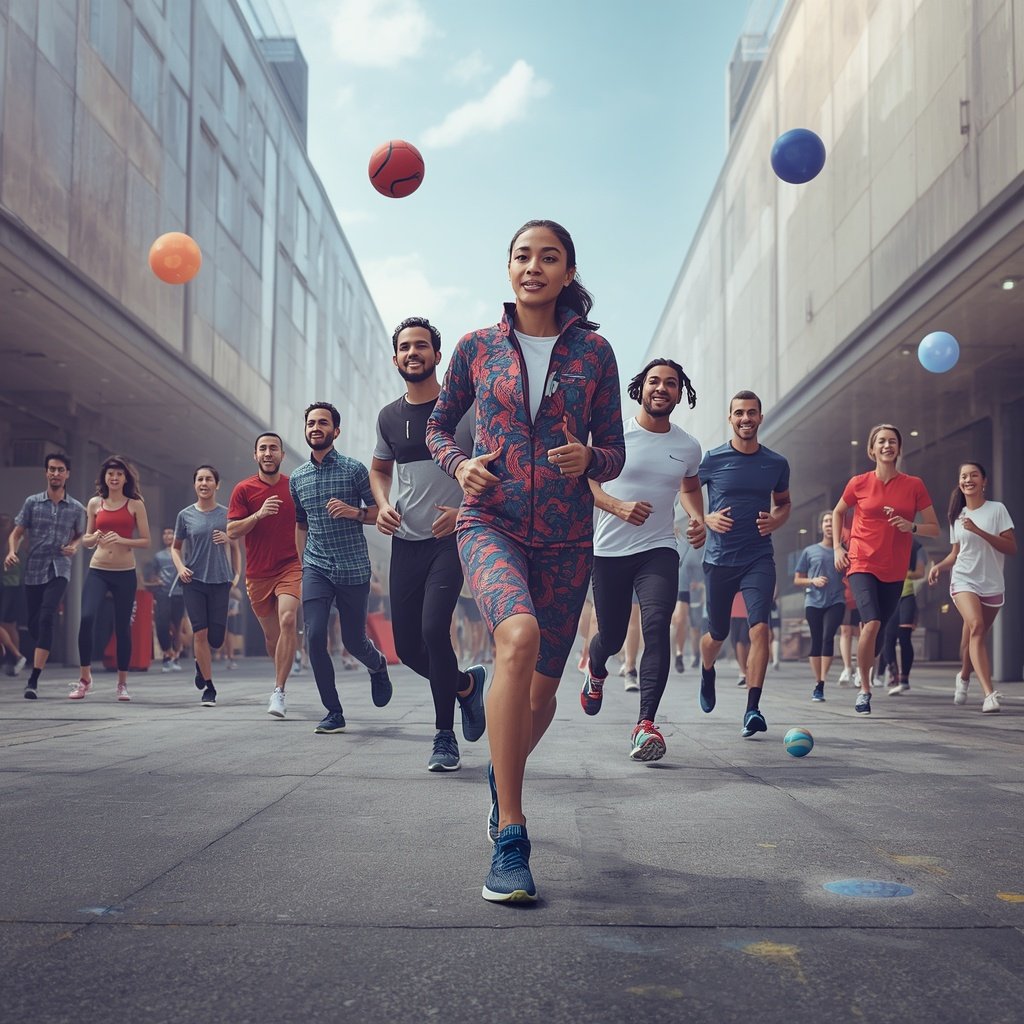
I selected this image because it represents athletic activity, inclusion, energy, and community.
Last remarks
This assignment helped me understand how AI can support several parts of the digital marketing process. I used ChatGPT to develop a customer persona, identify SEO keywords, generate content ideas, write a blog post, and create content for LinkedIn. I also used ChatGPT and Leonardo.AI together to create an image related to Nike.
This process showed me how AI can help marketers better understand their target customers and create content designed specifically for those audiences. I also learned that AI-generated information needs to be reviewed carefully because some information is based on estimates rather than verified customer data.